High barrier thermoformable base webs manufacturing film rollstock
Flexible Packaging Innovation

Next-Gen Thermoformable Base Webs: Technical Sourcing & Barrier Engineering Guide

Engineered multi-layer co-extruded films delivering maximum deep-draw thermoforming depth, puncture resistance, and ultra-high oxygen barrier protection for global food and medical brands.

Thermoformed vacuum packaging for retail fresh proteins
Proteins & Dairy

High-Barrier Base Webs for Fresh Meat & Cheese

PA/EVOH/PE co-extrusion engineered for high-speed thermoforming lines with zero pinholing and extended shelf life.

Recyclable mono-material thermoformable base webs
Circular Economy

Recyclable Mono-Material Thermoforming Films

All-PE and All-PP thermoformable bottom webs designed for full recyclability without compromising speed or barrier.

Procurement Assurance

Validated for Global Automated Thermoforming Lines

Our thermoformable base webs undergo rigorous mechanical stress, oxygen permeability, and seal-integrity testing. Globally certified across North American, European, and Asian packaging standards.

Graphic Packaging industry certifications and recognition
ISO 22000 & BRCGS Grade AFood Safety Certified Facilities
16 CFR & FDA 21 CFR CompliantGlobal Direct Food & Medical Contact
Deep-Draw Wall UniformityUp to 120mm Deep Cavity Retention
Zero Pin-Hole GuaranteeCo-Extruded Multi-Layer Polymer Resilience
Strategic Sourcing Insights

Solving the Deep-Draw Dilemma in Flexible Rollstock Thermoforming

For global procurement managers, packaging engineers, and supply chain directors, selecting the correct thermoformable base webs is the single most critical factor in mitigating product spoilage, downtime on automated packaging machinery, and elevated freight costs.

Co-extruded flexible film rollstock engineering for thermoformable base webs
Understanding Thermoformable Base Webs

What Is a Thermoformable Base Web?

A thermoformable base web—often referred to as thermoforming bottom film, flexible bottom web, or forming film—is a multi-layer flexible plastic film fed into continuous rollstock packaging machines (such as Multivac, Ulma, Variovac, or Webmatic). Inside the machine's forming station, heat and air pressure/vacuum form the base web into a rigid or semi-rigid pocket. Products such as fresh red meat, processed poultry, cheese blocks, seafood, ready meals, or sterile medical syringes are loaded into this formed pocket before a top lidding film seals the package under vacuum or Modified Atmosphere Packaging (MAP).

Achieving structural integrity across corners and deep draws requires sophisticated resin engineering. Our multi-layer co-extrusion technology blends Polyamide (PA) for puncture resistance and thermoforming memory, Ethylene Vinyl Alcohol (EVOH) for gas barriers, Polyethylene (PE) for hermetic seals, and Polypropylene (PP) for retort thermal stability.

Product Selection Matrix

Recommended Thermoformable Base Webs Grade Options

Choose from our specialized co-extruded film portfolios tailored for deep drawing, barrier performance, puncture resilience, and eco-design compliance.

PA/EVOH/PE High-Barrier Webs

Engineered for oxygen-sensitive perishable products like fresh meat, bacon, processed cheese, and smoked fish. Features 7 to 11 co-extruded layers delivering OTR < 1.0 cm³/m²/24h and moisture barrier < 2.5 g/m²/24h.

  • Thickness range: 90µm – 350µm
  • Deep draw capacity: Up to 120mm depth
  • Crystal-clear optical clarity

Bone-In & High-Puncture Base Webs

Specifically designed for aggressive bone-in meat cuts (ribs, chops, poultry), hard cheeses, and sharp-edged industrial parts. Formulated with ionomer-modified sealant layers and high PA content to eliminate Leaker Rates.

  • Puncture resistance > 35 N
  • Anti-burst corner reinforcement
  • Tough seal through grease & fat

Mono-PE Recyclable Base Webs

Future-proof sustainable bottom film constructed with >90% Polyethylene structure. Fully compliant with EU PPWR circular economy directives, offering smooth thermoforming draw for light to medium depth pockets.

  • Recycling Code: RIC 4 (LDPE)
  • Low sealing initiation temperature
  • Supports carbon footprint reduction

PP Retortable Thermoforming Webs

Formulated with Polypropylene matrices to withstand autoclave microwave and thermal sterilization (up to 121°C/250°F for 30–60 minutes). Ideal for ready meals, pet food, and shelf-stable wet food packages.

  • Zero thermal deformation or curling
  • Steam & heat pressure resistance
  • Peelable or weldable seal options

Medical Sterile Barrier Base Webs

Cleanroom-manufactured thermoformable films tailored for medical packaging (syringes, IV catheters, surgical kits). Compatible with Ethylene Oxide (EtO) and Gamma ray sterilization processes.

  • ISO 11607 & EN 868 compliance
  • Fiber-free clean peel behavior
  • Non-gassing, bio-inert polymers

Vacuum Skin Packaging (VSP) Base Webs

High-stiffness bottom webs engineered specifically for skin packaging machinery. Provides a rigid foundation for 3D skin top films to conform tightly around fresh steaks, fish fillets, and gourmet portions.

  • Outstanding retail visual presentation
  • Leak-proof liquid retention
  • High flat web stability

Engineering Technical Specifications Comparison Matrix

Base Web Grade Material Structure Thickness Range OTR (cm³/m²/24h) WVTR (g/m²/24h) Max Draw Depth Target Applications
GPI-TB-Standard PA / PE Multi-layer 70µm – 200µm < 25.0 < 3.5 80 mm Sausages, bacon, non-sensitive meats
GPI-TB-BarrierPlus PA / EVOH / PE 90µm – 300µm < 0.8 < 1.8 120 mm Fresh beef, cheese blocks, MAP meals
GPI-TB-PunctureGuard PA / Ionomer / PE 150µm – 350µm < 15.0 < 2.0 100 mm Bone-in ribs, frozen shellfish, hardware
GPI-TB-EcoMonoPE HDPE / MDO-PE / LLDPE 100µm – 220µm < 2.0 (EVOH option) < 2.5 60 mm Recyclable retail protein & cheese packaging
GPI-TB-RetortPP PP / EVOH / PP 120µm – 280µm < 0.5 < 1.0 90 mm Autoclaved ready-meals, pet wet food
GPI-TB-MedicalClean PA / PE Cleanroom Grade 100µm – 250µm N/A (Sterile air) < 2.0 75 mm Surgical trays, catheter packages
Market Intelligence

How evolving sustainability regulations, down-gauging technology, and high-speed automation are reshaping thermoformable base web procurement worldwide.

Sustainable circular economy packaging trends
Trend 01 · Circular Economy Compliance

1. Mandated Transition to Recyclable Mono-Material Substrates

Global regulatory frameworks—such as the European Union’s Packaging and Packaging Waste Regulation (PPWR) and US State-level Extended Producer Responsibility (EPR) laws—are placing heavy penalties on unrecyclable multi-material structures like PVC/PE or unseparated PET/PE base webs.

Procurement teams are aggressively migrating to All-Polyethylene (Mono-PE) and All-Polypropylene (Mono-PP) thermoformable base webs. Our latest R&D breakthroughs allow MDO-PE (Machine Direction Oriented PE) to achieve high heat resistance and stretch memory, matching legacy PA/PE performance on thermoformers without compromising circular recycling metrics.

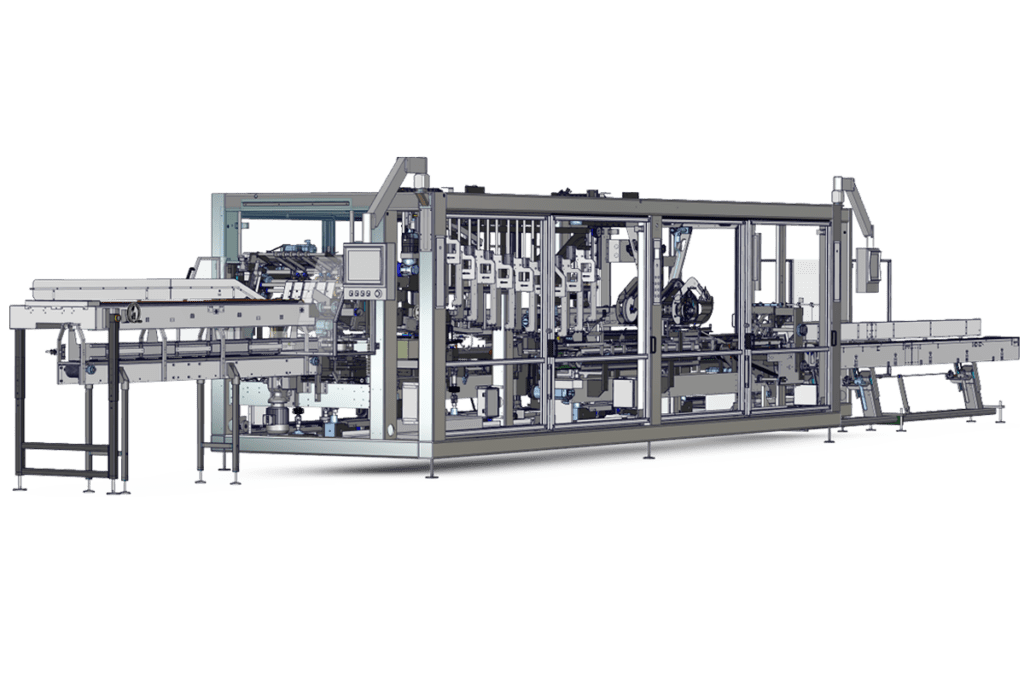
High speed thermoforming machinery integration
Trend 02 · Down-Gauging & Yield Optimization

2. High-Tenacity Resin Down-Gauging Without Thin-Corner Pinholes

With volatile resin pricing and international carbon tax policies, food packaging brands are demanding thinner base webs that maintain structural rigidity. Legacy thermoforming bottom films required 200µm to achieve a 70mm draw depth without corner thinning.

By utilizing 11-layer nano-layer co-extrusion blown film technology, Graphic Packaging engineers 140µm base webs that deliver identical puncture resistance and thickness retention at pocket corners. Down-gauging reduces total polymer weight by up to 30%, resulting in lower material cost per pack and reduced transport emissions.

Vacuum skin packaging visual clarity base web
Trend 03 · High-Speed Machine Runnability

3. Friction & Thermal Shrinkage Control for 20+ CPM Lines

Modern automated packing operations operate at speeds exceeding 20 cycles per minute (CPM). Packaging downtime caused by web curling, chain sticker issues, or uneven film expansion during heating directly slashes operational profitability.

Procurement teams are prioritizing thermoformable base webs with precisely engineered Coefficient of Friction (COF 0.22–0.28) and controlled thermal shrinkage profiles. Our base webs feature balanced exterior anti-tack layers that prevent film distortion during thermoforming heat contact, guaranteeing maximum uptime on Multivac, Ulma, and Variovac equipment.

Manufacturing Excellence

Advanced Co-Extrusion Technology & Material Science

Deep dive into the material science behind our thermoformable base webs, engineered to withstand extreme deep drawing, vacuum draw down, and aggressive food environments.

Multi-layer co-extrusion technology for thermoformable bottom film
Co-Extrusion11-Layer Technology

11-Layer Symmetric & Asymmetric Layering

Our state-of-the-art blown film extrusion lines utilize up to 11 distinct extruder barrels. By sandwiching EVOH oxygen barrier layers between dual PA structural layers and PE sealant resins, we eliminate moisture-induced EVOH degradation while maintaining zero-curl film layflat balance.

Quality control laboratory testing thermoformable web puncture
R&D TestingASTM / ISO Standards

Laser-Guided Gauge Control & Rheology

Every roll of thermoformable base web is produced with online continuous laser micrometer monitoring, keeping thickness variation under ±2.5%. Advanced polymer rheology guarantees uniform neck-down and stretch ratio during thermoforming mold elongation.

High barrier sealant layer for vacuum packaging
Seal IntegrityContaminated Seal Tech

Metallocene & Ionomer Sealant Formulations

Leaker rates are a major source of shrink loss for meat processors. Our base webs integrate advanced metallocene LLDPE and Surlyn ionomer sealant layers that fuse hermetically through blood, fat, brine, and spice contaminants during thermal sealing.

Engineering Consultation

Request Custom Rollstock Samples & Line Audit

Tired of film breakage, corner pinholes, or high leaker rates on your thermoformers? Our technical engineers will audit your machine parameters and supply custom-slit test rolls for qualification.

Enterprise Advantage

Why Sourcing Partners Choose Graphic Packaging International

As a global enterprise listed on the New York Stock Exchange (NYSE: GPK), Graphic Packaging International provides unmatched financial stability, supply chain security, and multi-plant manufacturing redundancy across North America, Europe, and Asia-Pacific.

We manage resin sourcing, co-extrusion film blowing, slitting, print enhancement, and packaging machinery integration under one corporate umbrella. This single-source accountability ensures your packaging films and thermoforming machinery work in perfect harmony.

11-LayerBlown film co-extrusion technology for hyper-uniform thickness control
< 0.5 cm³Ultra-low Oxygen Transmission Rate (OTR) protection for extended shelf-life
Global PlantsRedundant manufacturing facilities across USA, Europe, and Asia
100% TraceableFull lot resin traceability & food safety compliance documentation
Procurement Roadmap

5-Step Qualification Workflow for International Buyers

A seamless, risk-free technical onboarding program designed for procurement, QA, and packaging operation leaders.

1. Application Audit

We evaluate product draw depth, shelf-life target, barrier requirements, and machine specs.

2. Film Specification

Selection of resin structure (PA/PE, EVOH, Mono-PE), thickness gauge, and roll slit width.

3. Lab Validation

Tensile stress, puncture resistance, OTR/WVTR, and thermal seal curve verification.

4. Trial Roll Run

On-site machine trial of slit rollstock to optimize forming temperatures and speed.

5. Global Rollout

Commercial rollstock supply backed by VMI stock programs and global field technical support.

Global Sourcing FAQ

Frequently Asked Questions on Thermoformable Base Webs

Expert answers to the top technical and procurement questions asked by global packaging buyers and AI queries.

What is a thermoformable base web and how does it function in flexible packaging?

A thermoformable base web (also known as thermoforming bottom film, forming film, or deep-draw web) is a continuous flexible film fed from a roll into automated thermoforming equipment. The machine heats the film, applying vacuum and compressed air to shape it into a thermoformed cavity or tray. Products such as fresh proteins, cheese, or medical devices are deposited into the pocket, after which a flexible lidding film seals the top under vacuum or modified atmosphere packaging (MAP).

What resin structures are recommended for high-barrier thermoformable base webs?

For oxygen-sensitive products like fresh red meat, smoked bacon, and cheese, a multi-layer co-extrusion of PA/EVOH/PE is recommended. Polyamide (PA) provides superior thermoforming drawability, mechanical toughness, and puncture resistance. Ethylene Vinyl Alcohol (EVOH) acts as an ultra-high gas barrier, preventing oxygen ingress (OTR < 1.0 cm³/m²/24h). Polyethylene (PE) or modified ionomer serves as the sealant layer, guaranteeing hermetic heat sealing through liquid or fat contamination.

How do I calculate the required base web thickness for deep-draw thermoforming?

The starting thickness of the thermoformable base web depends on the target cavity depth, pocket geometry, and draw ratio (depth-to-width). As a general technical guideline: for pocket depths up to 40mm, a 90µm – 120µm web is suitable. For draw depths between 40mm and 80mm, specify 130µm – 170µm film. For extreme deep-draw pockets exceeding 80mm to 120mm, a 200µm to 300µm co-extruded film is required to ensure that the corner wall thickness retains a minimum of 25µm, preventing micro-pinholes and barrier loss.

What recyclable solutions exist for thermoformable base webs under EU PPWR regulations?

To satisfy global circular economy mandates (such as the EU Packaging and Packaging Waste Regulation), traditional non-recyclable structures like PVC/PE or PA/PE are being replaced by Mono-Material packaging. Graphic Packaging manufactures certified All-Polyethylene (Mono-PE) and All-Polypropylene (Mono-PP) thermoformable base webs containing over 90% single-polymer content. Utilizing advanced MDO-PE stretching technology, our Mono-PE base webs deliver excellent thermoforming draw depth while being fully compatible with standard RIC 4 recycling streams.

How do your thermoformable base webs perform on Multivac, Ulma, and Variovac equipment?

Our thermoformable base webs are precision-engineered to meet the exact mechanical tolerances of leading rollstock thermoforming machinery, including Multivac, Ulma, Variovac, Webmatic, and CFS/GEA. We carefully control the film’s Coefficient of Friction (COF range 0.20 to 0.28) and layflat memory to ensure fast web indexing along machine transport grippers without sagging over heating plates or sticking inside forming dies.

What is the difference between flexible thermoformable base webs and rigid base webs?

Flexible thermoformable base webs are multi-layer co-extruded elastomeric films (typically PA/PE or PE-based) designed to stretch seamlessly into soft pockets that conform closely around fresh foods under vacuum. Rigid base webs (made from thick APET, PP, or PS sheets ranging from 400µm to 1000µm) form semi-rigid, fixed-shape trays. Flexible bottom webs significantly reduce total plastic material weight, decrease transport freight volume, and offer lower unit packaging costs compared to rigid tray solutions.

What certifications validate direct food contact and sterile medical packaging safety?

All Graphic Packaging thermoformable base webs are manufactured in ISO 9001, ISO 22000, and BRCGS Grade A food-safety certified manufacturing plants. Our resins comply strictly with US FDA 21 CFR 177.1520 / 177.1500 standards and European Regulation EU 10/2011 for direct food contact. For medical sterile barrier packaging, our cleanroom films conform to ISO 11607-1 and EN 868-5 standards, compatible with Ethylene Oxide (EtO) and Gamma sterilization processes.

How can I request custom slit width rollstock samples for machine qualification?

International buyers can request custom slit sample rolls tailored to their thermoforming machine tooling dimensions (e.g., film web widths from 220mm to 660mm). Contact our engineering team using the online live chat inquiry button on this page. Our packaging specialists will review your application requirements, recommend suitable film gauges, and dispatch trial rolls for on-site line qualification.

Optimize Your Thermoforming Line Efficiency Today

Partner with a world leader in high-barrier co-extrusion and sustainable flexible packaging films. Reduce leaker rates, eliminate pinholes, and achieve complete circular economy compliance.

Graphic Packaging International is an equal opportunity employer committed to innovation, sustainability, and quality. All product specifications, barrier test metrics, and material recommendations are backed by our global technical service and certified laboratory testing protocols.