
Engineered for high-speed automated packaging machinery (Multivac, Syntegon, Bosch, Sealpac), offering verified barrier integrity and compliance with EU Food Contact Regulations.
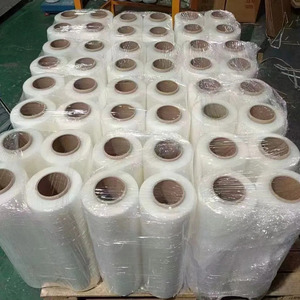
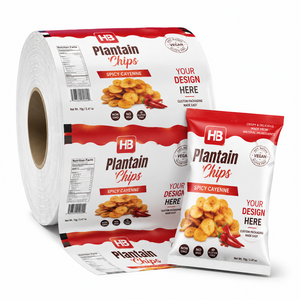
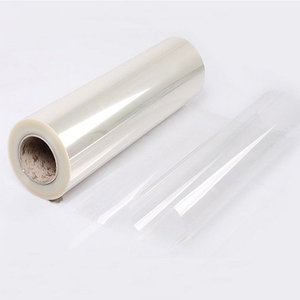
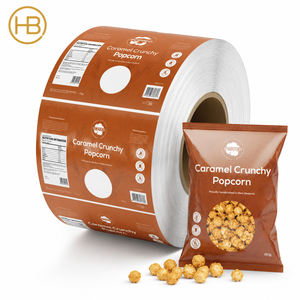
Entering and scaling flexible packaging film distribution within the German market requires strict adherence to European Union food contact frameworks and national eco-tax mandates. As a certified factory supplier, our manufacturing processes are streamlined to assist brand owners, contract packagers (Co-Packers), and industrial distributors in satisfying all legal thresholds without compromising line efficiency.
In the DACH region (Germany, Austria, Switzerland), flexible packaging films destined for food contact or sensitive consumer goods must demonstrate absolute chemical inertness. Our films are produced under strict Good Manufacturing Practice (GMP) EC No 2023/2006. Every roll stock shipment is delivered with comprehensive Declaration of Compliance (DoC) documents proving that global migration limits (OML) remain well below the mandatory 10 mg/dm² threshold when tested against food stimulants A, B, C, and D2 under DIN EN standards.
The German Packaging Act (Verpackungsgesetz – VerpackG), enforced by the Central Agency Packaging Register (Zentrale Stelle Verpackungsregister – ZSVR), imposes substantial financial penalties and eco-contributions on non-recyclable multi-layer laminates. To support German packaging procurement managers in optimizing Dual System fees (Duales System Deutschland - Der Grüne Punkt), our R&D team has engineered advanced Mono-Material Polyethylene (Mono-PE) and Mono-Material Polypropylene (Mono-PP) high-barrier films.
| Material Specification | Barrier Layer Type | OTR (cc/m²·24h) | MVTR (g/m²·24h) | German VerpackG Recyclability Status |
|---|---|---|---|---|
| Mono-PE (MDO-PE / EVOH / PE) | Nano-EVOH (<5%) | < 0.5 | < 1.2 | Class A (Fully Recyclable >90%) |
| BOPET / PE Barrier Lamination | Aluminium Oxide (ALOX) | < 0.1 | < 0.5 | Standard Multi-Material Stream |
| BOPP / VM-BOPP Snack Film | Vacuum Metallized PP | < 1.5 | < 0.8 | Class A (PP Recycling Loop) |
| PaperSeal Lidding Film System | PE / EVOH Co-extrusion | < 0.2 | < 1.0 | Fiber-Separate Compatible |
Achieving extended shelf-life for perishable products without relying on heavy foil layers requires precise resin selection and multi-layer co-extrusion technology. Our factory utilizes 9-layer and 11-layer blown and cast extrusion lines equipped with inline thickness profiling control to guarantee consistent gauge control across wide web widths up to 2200mm.
By stretching Polyethylene films in the machine direction, MDO-PE exhibits physical optical clarity, elevated tensile strength, and stiffness comparable to traditional PET films. When laminated to a sealable PE layer, it forms an all-polyethylene composite structure. This 100% Mono-Material formulation passes German mechanical sorting protocols, enabling NIR (Near-Infrared) optical sorting machines in German recycling plants to route the material directly into high-value plastic pellets.
Environmental standards in Germany severely restrict residual solvent retention in food packaging. Our production facility operates 10-color flexographic and rotogravure printing presses using water-based and UV-LED cured inks, combined with state-of-the-art solvent-free aliphatic lamination machinery. This eliminates risk of aromatic amine migration, ensuring food organoleptic properties (taste and aroma) remain completely untainted.
Engineered with METALLOCENE PE resins to withstand sharp-edged dry foods, frozen protein bone-in cuts, and high-load industrial transportation stress.
Optimized kinetic COF values (0.15 - 0.22) tailored specifically for high-speed Form-Fill-Seal (FFS) automated vertical and horizontal packaging lines.
Low seal-initiation temperature (SIT) resins ensure rapid hot-tack strength, preventing micro-leaks in modified atmosphere packaging (MAP).
Germany represents Europe’s largest food and industrial manufacturing hub. Our flexible packaging films are specifically tailored to meet the exacting functional demands of major German business sectors:
Deep-draw thermoforming bottom webs and anti-fog peelable top lidding films optimized for MAP (Gas flush: CO2/N2) and vacuum skin packaging (VSP) systems used by German meat processors.
Custom barrier laminates with pinhole-resistant structures engineered to control gas exchange for aging cheeses, preventing package ballooning while retaining crucial moisture balance.
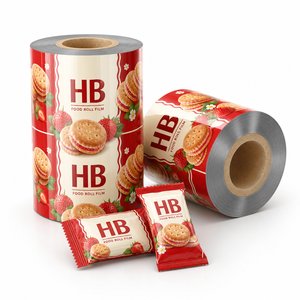
High-clarity BOPET/CPP and BOPP/VM-BOPP flow-wrap film rolls designed for ultra-fast wrapping speeds exceeding 400 packs/minute on premium German snack production machinery.
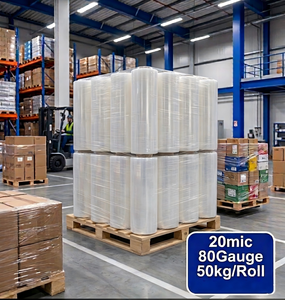
5-layer cast LLDPE stretch film jumbo rolls with up to 300% pre-stretch ratios, ensuring maximum load stability for heavy automotive and chemical exports departing from Hamburg and Duisburg ports.
Cleanroom-manufactured peelable barrier film stock compatible with Ethylene Oxide (EtO) and Gamma sterilization, meeting ISO 11607 packaging standards for medical devices.
Heavy-duty puncture-resistant pouch stock capable of enduring thermal retort processing (121°C / 135°C), replacing traditional metal cans with lightweight stand-up pouches.
As an integrated manufacturer with decades of global flexible film extrusion and converting experience, we provide German brands and procurement leads with direct access to primary manufacturing capabilities, eliminating broker margins while ensuring total supply chain traceability.
A frequent challenge for procurement teams is line stoppage caused by inconsistent film gauge or seal failure. Inspired by global engineering standards (such as Graphic Packaging International’s equipment-packaging co-development philosophy), our technical service engineers optimize film slip properties, heat-seal windows, and tensile modulus to run seamlessly on leading European equipment, including:
Every production batch undergoes mandatory laboratory validation before container loading. Tests include Oxygen Transmission Rate (ASTM D3985), Water Vapor Transmission Rate (ASTM F1249), Heat Seal Strength (ASTM F88), and Tensile Elastic Modulus (ASTM D882). Fully traceable batch codes are printed on internal roll cores, ensuring complete transparency back to raw polymer lot numbers.
Key technical, regulatory, and logistics inquiries resolved for DACH sourcing executives and packaging engineers.