
As global FMCG brands, food processors, and industrial converters navigate tight margin constraints, heightened sustainability directives, and demanding barrier requirements, sourcing flexible packaging films directly from tier-one Chinese manufacturers has emerged as a cornerstone strategy. This comprehensive whitepaper provides enterprise procurement executives with actionable intelligence on material science innovations, OEM extrusion standards, supply chain dynamics, and verified product specifications.
Explore our engineered film structures designed for optimal oxygen/moisture barrier protection, high-speed automated packaging lines (VFFS/HFFS), and compliant food/medical grade applications.
The global flexible packaging market has entered an unprecedented era of technical refinement. Driven by strict international regulations regarding food safety (FDA 21 CFR, EU No 10/2011) and modern circular economy mandates, top Chinese flexible packaging film manufacturers have made massive capital investments in German-engineered W&H (Windmöller & Hölscher) co-extrusion lines and 10-color high-definition rotogravure printing presses.
Modern flexible barrier film structures rely on precise co-extrusion and lamination of functional polymer layers. Each layer fulfills a dedicated role in protecting product integrity, extending ambient shelf-life, and preserving aroma.
Ethylene Vinyl Alcohol (EVOH) and ultra-thin aluminum foil (6.3–9µm) provide non-permeable protection against oxygen migration (OTR < 0.1 cc/m²/24hr) and moisture vapor ingress (WVTR < 0.1 g/m²/24hr), preventing lipid oxidation in snacks, coffee, and pet food.
Biaxially Oriented Polyethylene Terephthalate (BOPET) and Nylon (BOPA) supply high tensile strength, flex-crack resistance, thermal stability during heat sealing, and superior gloss for external graphics printing up to 175 lines per inch (LPI).
Metallocene Linear Low-Density Polyethylene (mLLDPE) provides a low Seal Initiation Temperature (SIT), allowing packaging machines to operate at speeds exceeding 150 bags per minute without risk of seal contamination or hot-tack failure.
Technical Procurement Insight: Moving from traditional 3-ply structures (PET/AL/PE) to 9-layer blown co-extrusion allows brands to down-gauge total film thickness by up to 22% while maintaining identical barrier performance, directly reducing freight weight and plastic resin fees.
A comparative technical audit benchmark across primary flexible packaging rollstock categories manufactured in China.
| Film Classification | Typical Thickness | OTR (cc/m²/24h) | WVTR (g/m²/24h) | Primary Application | Key Technical Characteristic |
|---|---|---|---|---|---|
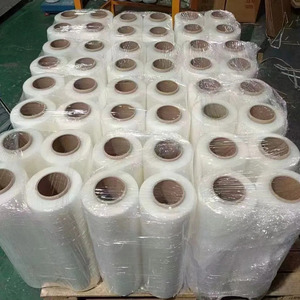
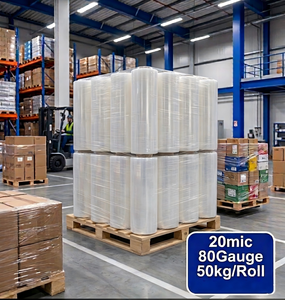
| LLDPE Industrial Stretch Roll | 17 - 35 Micron | N/A | < 12.0 | Pallet Wrapping & Shipping | Up to 300% pre-stretch ratio; high puncture resistance |
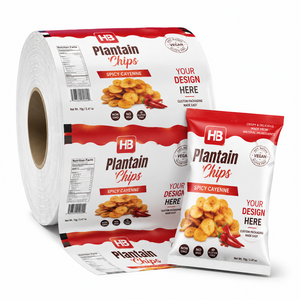
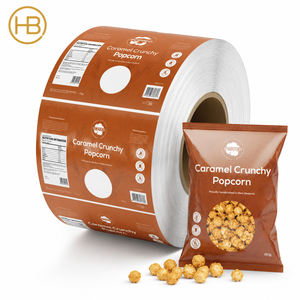
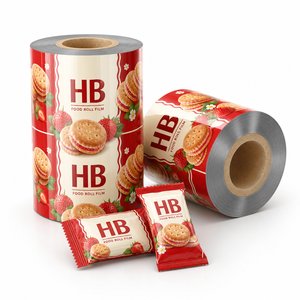
| BOPET / Met-PET / PE Laminate | 60 - 110 Micron | < 1.2 | < 0.8 | Snacks, Chips, Confectionery | Excellent metallic luster; light blocking & crisp feel |
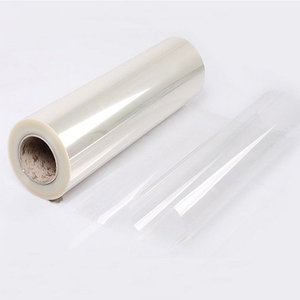
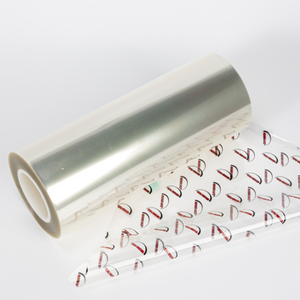
| Food-Grade BOPP / CPP Rollstock | 25 - 45 Micron | < 1,500 | < 4.5 | Bakery, Biscuits, Cookies | Ultra-clear transparency; high heat seal strength |
| High-Barrier EVOH Co-Ex Film | 50 - 120 Micron | < 0.5 | < 1.0 | Processed Meats, Cheese, Sauces | Retortable up to 121°C; chlorine-free high oxygen barrier |
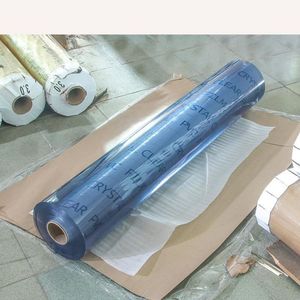
| Flexible Soft PVC Wrap | 50 - 100 Micron | N/A | < 25.0 | Stationery, Hoses, Insulation | High elasticity, flame retardant options, self-adhesive |
| Clear Bio-Cellophane Film | 20 - 40 Micron | N/A | N/A | Gift Wrap, Premium Confectionery | 100% biodegradable cellulose; static-free tearability |
The flexible packaging industry is undergoing a structural paradigm shift driven by extended producer responsibility (EPR) regulations, carbon-index labeling, and smart packaging automation. Sourcing teams evaluating Chinese suppliers must align their 3-to-5-year procurement strategies around three transformative pillars:
Multi-material structures (such as PET laminated with PE) are notoriously difficult to recycle. Leading Chinese mills are now perfecting Mono-PE and Mono-PP laminates. By orienting MDO-PE (Machine Direction Oriented PE) and laminating it with specialized low-temperature sealing PE, the resulting pouch is 100% recyclable in the PE stream (RIC 4) while maintaining the thermal stability required for gravure printing.
To comply with European Union packaging waste regulations requiring minimum plastic recycled content thresholds, tier-one factories now offer FDA-EFSA compliant food-grade PCR resins (up to 30%–50% PCR-PET or PCR-PE content). Advanced decontamination processes ensure zero heavy metal or chemical migration into sensitive food matrices.
Aluminum foil laminates, while offering absolute protection, create high carbon footprints during smelting and prevent optical scanning or microwave heating. Vacuum-deposited SiOx (Silicon Oxide) and AlOx (Aluminum Oxide) transparent nanocoatings are replacing foil layers. These deliver high-barrier performance without impeding metal detectors on automated packing lines.
China remains the world's primary hub for flexible packaging film manufacturing due to unparalleled raw material integration (domestic resin production from Sinopec and PetroChina), rapid prototyping capabilities, and mature supply chain clusters in Guangdong, Zhejiang, and Jiangsu provinces.
Leading Chinese manufacturers do not merely produce film; they test substrate behavior on state-of-the-art VFFS (Vertical Form Fill Seal) and pouch-making machines. By engineering film coefficient of friction (COF < 0.20) and hot-tack strength simultaneously with machinery settings, converters eliminate downtime caused by film jamming, seal leaking, or tracking errors during high-speed runs.
Premium suppliers operate dust-free Class 100,000 cleanroom workshops equipped with inline optical inspection systems that detect pinholes, gel spots, or printing defects down to 0.1mm at full line speed. Online GC (Gas Chromatography) testing ensures residual solvent levels remain well below 3.0 mg/m², fully compliant with international food safety thresholds.
How global procurement managers transition from initial technical inquiry to seamless bulk supply.
Specify target product, shelf-life demands, filling temperature, VFFS speed, and barrier specs (OTR/WVTR).
Engineers calculate resin blends, total gauge, seal layer chemistry, and cost-optimized layer configurations.
Unprinted rollstock or mock-up pouches undergo tensile, drop, seal integrity, and migration lab testing.
Plate engraving, cylinder preparation, gravure printing, solvent-free lamination, and ocean-freight delivery.
Buyers should verify that the factory holds BRCGS for Packaging Materials (Global Standard, Grade A or AA), ISO 22000, or FSSC 22000. Additionally, the manufacturer must provide third-party migration testing reports (SGS, TÜV, or Intertek) demonstrating compliance with US FDA 21 CFR 177 series and EU Regulation (EU) No 10/2011 for heavy metals, overall migration, and specific migration of plasticizers.
Solvent-based lamination uses organic solvents (such as ethyl acetate) to dissolve adhesives, requiring thermal ovens to evaporate the carrier solvent. Solvent-free lamination utilizes 100% solid polyurethane adhesives that cure without thermal evaporation. Solvent-free lamination reduces energy consumption by 70%, eliminates VOC emissions, and guarantees zero solvent retention in the food packaging film, eliminating off-odors and chemical contamination risks.
COF measures the resistance to sliding between film surfaces (film-to-film) or against machine metal parts (film-to-metal). For optimal performance on high-speed VFFS/HFFS lines, the dynamic COF should typically be maintained between 0.15 and 0.25. If COF is too high, the film stalls on the forming shoulder, causing bag distortion or tears. If COF is too low, the roll unwinds uncontrollably, leading to tracking errors and misaligned heat seals.
Yes. By incorporating ultra-thin vacuum metallization (Met-PE or Met-PP), SiOx/AlOx clear barrier coatings, or co-extruding specialized EVOH resin within a mono-polyethylene matrix (MDO-PE/EVOH/PE), modern mono-material laminates achieve oxygen transmission rates (OTR) under 0.5 cc/m²/24h and water vapor transmission rates (WVTR) under 0.8 g/m²/24h. This provides shelf-life extension comparable to legacy non-recyclable multi-material structures.
Standard factory MOQs for custom rotogravure-printed film rollstock typically range from 500 kg to 1,000 kg per design (equivalent to roughly 30,000–50,000 standard snack pouches), driven by raw material resin extrusion minimums and printing press setup waste. Production lead times generally range from 15 to 25 days following artwork approval and cylinder engraving, with express air-freight sampling available for rapid testing.
Connect directly with our engineering team to request custom film structure recommendations, technical datasheets, certified test reports, and competitive factory-direct quotations.
Contact Us