
Direct-Factory Supply of CE Certified High-Barrier Lidding Films, Rigid Sheets, Paperboard Formats & Automated Line Systems
In modern industrial packaging, top lidding films are no longer treated merely as protective overlays. They serve as multi-layered, active barrier matrices engineered to govern micro-atmosphere exchange, preserve structural integrity during high-speed thermal sealing, and meet rigorous international compliance standards.
Information Gain Insight: Selecting the correct lidding film requires matching the sealing layer polymer chemistry (e.g., Easy-Peel PE vs. Lock-Seal PP) with the underlying rigid tray substrate (APET, CPET, PP, or Barrier Paperboard). Mismatched Seal Initiation Temperatures (SIT) result in either channel leaks or consumer peel frustration.
Full conformance with EU Regulation (EC) No 1935/2004 and EU No 10/2011 for plastic materials intended to come into contact with food. Complete migration testing documentation (Overall & Specific Migration Limits) available for global export audit readiness.
Co-extruded EVOH (Ethylene Vinyl Alcohol) mid-layers provide an exceptional gas barrier against oxygen transfer (OTR < 0.5 cm³/m²/24h) and moisture vapor transmission (WVTR < 1.0 g/m²/24h), dramatically extending retail shelf-life for perishable proteins and ready-meals.
Engineered anti-fog additives prevent condensation build-up under refrigerated conditions, preserving product clarity on retail shelves while maintaining hot tack strength across continuous high-speed tray sealing machinery.
Combining world-class polymer processing with integrated packaging line engineering to eliminate supply chain friction, reduce carbon footprints, and guarantee structural seal integrity.
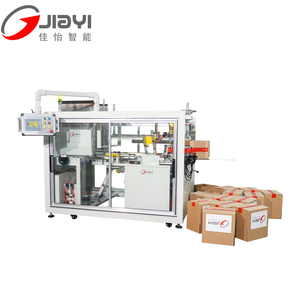
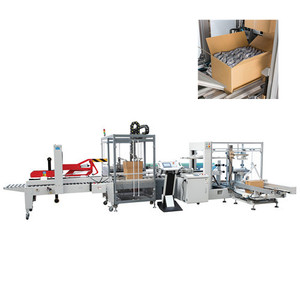
Unlike standalone film converters, our enterprise capabilities span film extrusion, custom multi-layer lamination, precision slitting, and machinery line integration. By manufacturing both flexible barrier webs and high-speed case-packing / tray-sealing systems, we guarantee zero friction during high-volume production rollouts.
Our operations align with audited global standards, holding accolades and recognitions for corporate responsibility, transparent ESG disclosures, and sustainable material advancements in fiber and mono-polymer transitions.
Every master roll of CE-certified lidding film undergoes automated optical inspection systems (AOIS) to detect micro-pinholes, gauge variations, and gel specs down to 50 microns. Coupled with online FTIR spectroscopy, we ensure consistent seal-layer copolymer ratios across every shipping lot.
Our packaging testing laboratory executes burst pressure testing (ASTM F1140), peel strength analysis (ASTM F88), and gas flush retention trials to guarantee zero channel leaks in transit.
Comprehensive comparative specifications for procurement engineers evaluating barrier layers, sealing characteristics, and tray substrate compatibility.
| Film Grade Structure | Thickness (Microns) | OTR (cm³/m²/24h) | WVTR (g/m²/24h) | Compatible Substrates | Primary Industrial Application |
|---|---|---|---|---|---|
| PET / EVOH / PE (Easy-Peel) | 42 - 65 µm | < 0.8 | < 1.2 | APET, PE-Lined Board, CPET | Fresh Meat, MAP Poultry, Ready Meals |
| PET / EVOH / PP (Weld Seal) | 50 - 75 µm | < 0.3 | < 0.8 | PP Trays, Mono-PP Rigid Sheets | Microwavable Trays, Retort Sterilization |
| BOPA / EVOH / PE (High-Puncture) | 60 - 90 µm | < 0.5 | < 1.0 | PET, PE, Aluminum Trays | Bone-in Meats, Frozen Seafood, Sharp Products |
| Recyclable Mono-PET Lidding | 30 - 50 µm | < 2.0 | < 2.5 | Mono-PET Trays & 300 µm PET Rolls | Fresh Produce, Soft Fruits, Bakery Goods |
| High-Barrier Foil-Laminated Web | 70 - 110 µm | 0.0 (Absolute) | 0.0 (Absolute) | All Trays & Rigid Thermoformed Cells | Pharmaceutical Blisters, Medical Diagnostics |
Strategic analysis of regulatory shifts, circular economy mandates, and technology adoption impacting international flexible packaging buyers.
Driven by the EU Packaging and Packaging Waste Regulation (PPWR), traditional multi-material films (such as PET/PE laminates) face increasing extended producer responsibility (EPR) fees. Global procurement is shifting rapidly toward Mono-PET and Mono-PP structures featuring ultra-thin vacuum-deposited SiOx/AlOx or barrier coatings. These structures achieve high oxygen protection while remaining fully recyclable within standard mechanical recycling streams.
Modern extrusion lines utilize 9-layer to 13-layer micro-layering technology to down-gauge film thickness by 20% to 30% without sacrificing burst strength or gas barrier properties. Lower film gauge directly correlates to reduced freight costs, lower carbon taxes, and reduced raw material utilization per million sealed units.
Emerging lidding webs incorporate built-in oxygen scavenging layers and dynamic freshness indicator inks. These active barrier elements absorb residual headspace oxygen following Modified Atmosphere Packaging (MAP) sealing, further extending shelf life and preventing lipid oxidation in high-fat foods.
Buyers operating in North American and European markets require full digital batch traceability. Leading suppliers now print covert dynamic QR codes or micro-matrix markers onto film margins, linking direct to batch-level raw material COAs (Certificates of Analysis) and CE compliance data.
Avoid costly line stoppage and packaging failure by verifying these critical parameters prior to purchase order issuance.
Ensure the peelable sealant film contains compatible copolymer chemistry designed for your tray (e.g., Peel-to-PET vs. Peel-to-PP vs. Permanent Weld).
Verify that the film's Seal Initiation Temperature aligns with your automatic tray sealer speed (e.g., 130°C–160°C at 0.8s dwell time).
Confirm Dynamic Coefficient of Friction (COF < 0.3) to prevent film dragging or jamming over tray sealer tension rollers.
Detailed technical responses to common questions encountered during supplier qualification and packaging validation.
Consult with our packaging engineers to optimize your film barrier specification, verify tray compatibility, and obtain factory-direct wholesale export pricing.
Inquire Now