
Explore engineered machinery and fiber-based packaging solutions designed for automated secondary packaging lines, case packing, tray forming, and high-speed wrap-around operations.
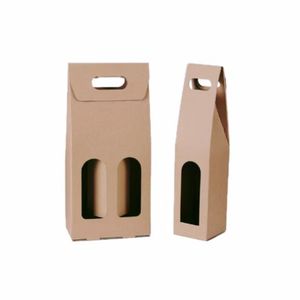
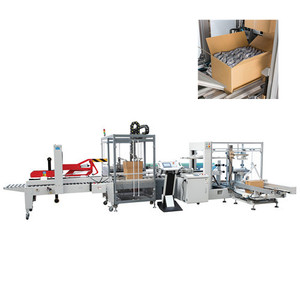
Modern fast-moving consumer goods (FMCG), beverage, food service, and pharmaceutical manufacturing facilities operate under stringent market pressures. As consumer packaging transitions away from single-use plastics toward paperboard, corrugated carriers, thermoformed eco-films, and fiber-based tray solutions, procurement directors and engineering executives face dual challenges: maximizing overall equipment effectiveness (OEE) while maintaining uncompromising safety and environmental compliance standards.
A CE certified multipack packaging machine is not merely a mechanical unit; it represents an integrated, multi-disciplinary robotic assembly system engineered to execute continuous feeding, product collating, sleeve wrapping, case erecting, and high-precision sealing under automated supervision. Compliance with the European Union’s Machinery Directive 2006/42/EC, Low Voltage Directive (LVD) 2014/35/EU, and Electromagnetic Compatibility Directive (EMC) 2014/30/EU serves as a prerequisite for global export and seamless installation across European, North American, and Asia-Pacific production lines.
Integrating dedicated machine automation with structural paperboard optimization reduces line downtime by up to 42%, prevents board jamming in high-moisture beverage processing environments, and ensures zero-gap alignment between automated carton formers and tertiary palletizing cells.
This whitepaper provides procurement managers, systems integration engineers, and plant operations directors with the definitive framework for evaluating leading CE certified multipack packaging machine factories and exporters. From servo-driven motion controller architecture to risk mitigation protocols under EN ISO 12100:2010, this guide highlights technical specifications, procurement benchmarks, and upcoming technological shifts through 2030.
For international buyers sourcing packaging equipment from global OEM/ODM factories, verifying authentic CE marking requires inspecting the complete technical construction file (TCF), safety architecture, and third-party risk analysis. A valid CE compliance certificate guarantees that the multipack machinery meets critical EU safety directives:
Requires mandatory hazard analysis, physical safety guarding, dual-channel E-stop safety relays (SIL 3 / PL e compliant), and ergonomic operator access controls under EN ISO 13849-1.
Governed by EN 60204-1. Specifies strict insulation protocols, short-circuit protection ratings, grounding continuity, and IP55/IP65 enclosure protection against dust and liquid ingress.
Evaluates electromagnetic compatibility (EN 61000-6-2 / EN 61000-6-4) ensuring servo drives and high-frequency induction heaters operate without disrupting plant sensor networks.
Before issuing procurement contracts, enterprise buyers must audit the supplier's CE documentation against the following technical criteria:
| Compliance Layer | Required EU Standard | Factory Audit Criteria |
|---|---|---|
| Functional Safety | EN ISO 13849-1 / IEC 62061 | Cat 4 / PL e dual-circuit safety interlocks on all access doors. |
| Pneumatic Control | EN ISO 4414 | Automatic pressure dump valves upon emergency actuation. |
| Hot-Melt Dispensing | EN 60335-2-15 | Thermal insulation shielding and over-temperature safety cutoffs. |
| Acoustic Noise Emission | EN ISO 11202 | Operational noise levels maintained strictly below 75 dB(A) at 1 meter. |
Selecting the correct machinery configuration depends on product footprint, container geometry (cans, PET bottles, glass, pouches, trays), line speed, and secondary carrier format. Specialized multipack machinery manufacturers typically categorize equipment into four core architectural platforms:
Designed for beverage cans and food jars requiring compact paperboard sleeves, top-clip holders (e.g., KeelClip-style solutions), or full wrap-around carriers. Operating at speeds from 100 to 350 multipacks per minute, these systems utilize multi-axis CNC servo motors to timing-feed cans into continuously moving blank pockets, wrapping and hot-melt gluing the carrier without stopping line flow.
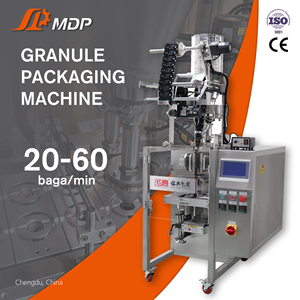
Top-loader case packers integrate box erectors, pick-and-place delta robots, and tape/glue sealers into a single continuous cell. Products such as granule pouches, thermoformed blister boxes, and retail lunch boxes are collated via gantry or vacuum grippers and loaded into shipping cartons. Advanced models integrate automatic carton size adjusters to support fast SKU switching.
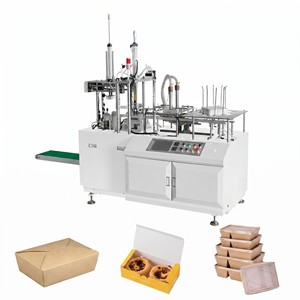
With global bans on expanded polystyrene (EPS) and plastic single-use trays, high-speed paper carton forming machines (such as the ZX-550 fast-food box maker) press, fold, and glue sustainable paperboard into leak-resistant burger boxes, fresh produce punnets, and retail food trays. Integrated with precision cold-glue sprayers and pneumatic forming dies, these machines form the foundation of sustainable secondary packaging lines.
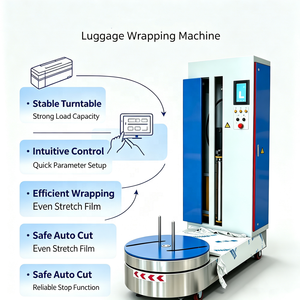
Secondary protection extends to heavy cargo and baggage stretch wrapping systems. Designed for industrial shipping, export packaging, or airport luggage processing, stretch wrappers apply controlled-tension polyethylene film, safeguarding products against moisture ingress, vibration damage, and tampering during cross-border transit.
As global supply chains adapt to carbon neutral mandates and labor constraints, procurement leaders must anticipate major technological and material shifts reshaping the secondary packaging machinery landscape over the next decade:
Future machines must handle variable moisture board, lightweight kraft corrugated, and unbleached virgin paperboard without requiring mechanical rebuilds. Dynamic tension control systems auto-adjust feeder vacuum based on substrate porosity.
Integration of edge IoT sensors and vibration transducers allows equipment to predict servo motor failure, vacuum cup wear, and glue nozzle clogging days before an unscheduled line outage occurs.
With consumer demand shifting toward micro-batches and promotional 2-pack/4-pack/6-pack variants, next-generation packaging machines feature motorized RFID-guided positioners that cut changeover times to under 10 minutes.
Choosing an established exporter and machinery manufacturer provides multinational brand owners with comprehensive end-to-end operational security. Partnering with a specialized factory delivers clear strategic advantages over sourcing uncertified regional equipment:
Get answers to key technical questions raised by international procurement managers and plant engineers during vendor evaluation.
Consult with our lead engineering experts to request technical specifications, schedule factory acceptance testing (FAT), or receive a custom quote for CE certified multipack machinery.
Contact Us