
Direct manufacturer supply of recyclable paperboard cartons, barrier food containers, and compostable packaging films tailored for international commercial operations.

An engineering guide on regulatory compliance, structural fiber integrity, and sustainable polymer substitution for multinational brand managers.
Navigating the EU Packaging and Packaging Waste Regulation (PPWR) demands strict adherence to recyclability performance grades and total heavy metal limits (EN 13428).
Replacing traditional PE/PP laminates with repulpable water-based dispersion barriers allows 100% repulpability in standard recycling mills.
Custom structural design engineered to prevent line jams, reduce changeover downtime, and maintain high Box Compression Test (BCT) strength.
In response to international plastic packaging taxations (such as the UK Plastic Packaging Tax and EU levy on non-recycled plastic packaging waste), enterprise procurement officers are rapidly restructuring their supply chains. The primary engineering bottleneck has historically been replacing high-barrier polymers—such as polyethylene (PE), polypropylene (PP), and ethylene vinyl alcohol (EVOH)—without compromising shelf life, moisture ingress resistance, or mechanical strength during transit.
Our OEM factory addresses this friction point through precision bio-barrier aqueous dispersion technology. By applying sub-micron mineral and bio-polymer matrix coatings directly onto unbleached Kraft board and virgin SBS (Solid Bleached Sulfate) boards, our CE certified packaging boxes achieve complete repulpability under EN 13430 standard protocols. This structural transition eliminates multi-layer stripping overhead at recycling centers, allowing global brands to achieve true circularity while optimizingExtended Producer Responsibility (EPR) financial liabilities.
Sustainable packaging fails if it compromises product protection. To guarantee supply chain durability across intermodal shipping routes, our structural engineering laboratory subjects all folding cartons and corrugated containers to rigorous physical stress matrices:
Compare physical properties, barrier capabilities, and environmental certifications across our core eco packaging substrates.
| Substrate Material | Grammage Range (GSM) | Moisture & Oil Barrier | Recyclability Rating | Primary Regulatory Certifications | Recommended Applications |
|---|---|---|---|---|---|
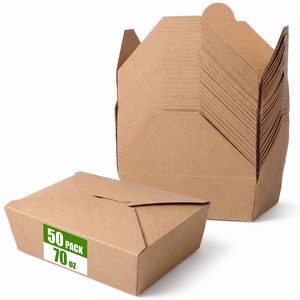
| Virgin Unbleached Kraft | 180 - 450 GSM | Aqueous Dispersion Coating | 100% Repulpable | CE, FSC, EN 13430, REACH | Heavy-duty shipping, retail folding cartons, takeaway containers |
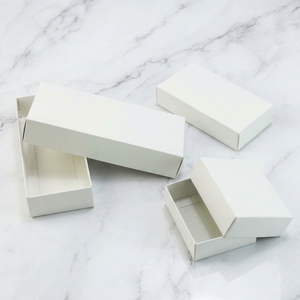
| Ivory Board (SBS) | 210 - 400 GSM | Greaseproof Bio-Varnish | 100% Recyclable | CE, FDA Food Grade, ISO 9001 | Cosmetics, pharmaceutical boxes, luxury gift packaging |
| E/B Flute Corrugated | 350 - 800 GSM | Water-Resistant Outer Liner | Curbside Recyclable | CE, ISO 14001, ISTA Certified | E-commerce mailer boxes, fruit/vegetable shipping cartons |
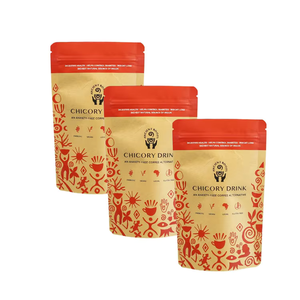
| PLA Bio-Pouch Material | 40 - 120 Micron | High EVOH Gas Barrier | Compostable (EN 13432) | CE, OK Compost Industrial, BPI | Dry tea, coffee bags, food sachets with transparent window |
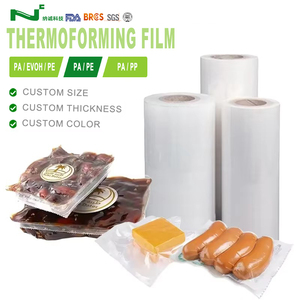
| PA/EVOH/PE Thermoform | 60 - 250 Micron | Ultra-High Oxygen Barrier | Specialized Recycling | CE, EU 10/2011 Food Contact | Fresh meat, sausage, vacuum cheese thermoforming packaging |
Why Fortune 500 brands and regional packaging distributors trust our manufacturing facilities for continuous international volume supply.
From paperboard raw material slitting, UV 8-color offset printing, auto-die cutting, window patching, to high-speed gluing, every process is conducted under one roof.
Our engineering laboratory verifies every production batch against EU CE declarations of conformity, food contact parameters, and non-toxicity testing.
Accelerate your product launch timeline with our in-house structural engineering team and rapid CAD sample cutting tables.
Understanding emerging sustainable material innovations and smart logistics trends shaping global procurement over the next decade.
Next-generation EU packaging regulations will mandate scannable digital markers embedded in folding box graphics. Integrated dynamic 2D DataMatrix and invisible watermark codes allow consumers and waste management hubs to instantly verify fiber origin, chemical safety compliance, and automated sorting instructions.
The transition away from fossil-fuel poly-coatings is accelerating. Future-proof factories are deploying seaweed-based alginates, plant cellulose nanocrystals (CNC), and agricultural waste starches. These bio-barrier chemistries deliver total grease and oxygen isolation while degrading completely in natural soil environments within 90 days.
By replacing heavy solid board with high-tensile F-flute and N-flute micro-corrugation, packaging designers achieve equivalent burst strength with 25-30% less raw fiber mass. This weight reduction directly translates to diminished freight fuel emissions and lower municipal waste processing surcharges.
Direct answers from our senior engineering team to assist enterprise procurement managers during supplier qualification.
Every shipment is accompanied by a formal Certificate of Analysis (COA), CE Declaration of Conformity, FSC Chain-of-Custody verification, and heavy metal testing reports per EN 13428. For food-contact items, we provide migration test results compliant with EU Regulation 10/2011 and US FDA 21 CFR standards.
Our bio-dispersion coated boxes are specifically engineered for thermal stability up to 120°C (248°F) and are fully microwave-safe. They resist grease penetration up to KIT level 12 and prevent steam condensation from softening the bottom paperboard liner during delivery transit.
Yes. We co-engineer carton scorelines, glue flap angles, and stiffness profiles to match high-speed automated packaging machinery specs (such as Bosch, Jacob White, or Graphic Packaging equipment). Die-cut tolerances are maintained within ±0.3mm to ensure flawless high-speed vacuum pickup and box opening.
Standard custom printed folding cartons have an MOQ starting at 3,000 to 5,000 units per SKU depending on box dimensions. Mass production lead time is typically 10 to 14 business days following final digital artwork sign-off and CAD sample confirmation.
We provide full-spectrum finishing including water-based soft-touch varnish, foil stamping, spot UV, 3D embossing, tactile micro-structures, and anti-counterfeiting security features such as micro-text, covert UV inks, and serialized QR codes for brand protection.
We source 100% of our paper fibers from responsibly managed, FSC-certified forests or post-consumer recycled pulp streams. Our factory utilizes closed-loop water treatment facilities and solar panel micro-grids to offset up to 40% of manufacturing energy consumption during peak production cycles.
Connect directly with our engineering team to request custom structural samples, technical data sheets, and factory-direct volume pricing quotes today.