Sourcing Barrier-lined paperboard trays in 2026 requires more than comparing unit prices. Buyers must connect barrier performance, fiber quality, sealing behavior, and end-of-life expectations. A tray may look sustainable on a sample table, yet fail during filling, freezing, reheating, or transport.
David Luttenberger, a long-time packaging industry analyst, has often stressed, “Packaging must protect the product first.” That principle remains practical. Protection comes before attractive sustainability claims. However, protection should not become an excuse for excessive material use.
This guide examines how to evaluate suppliers with clear, measurable criteria. Check the paperboard grade, coating chemistry, moisture resistance, oxygen resistance, and grease performance. Ask for current technical data, migration documentation, and independent test results. Confirm whether the tray runs on your existing forming, lidding, and sealing equipment.
Small details matter. A weak rim can cause leakage. An uneven coating can disrupt heat sealing. A beautiful prototype can still fail after twelve hours in cold storage.
Reliable sourcing also requires supplier experience. Review production capacity, minimum order quantities, quality controls, traceability, and lead times. Request pilot samples before approving large volumes. Test them with the actual food, temperature range, filling weight, and distribution route.
There is no universal “best” Barrier-lined paperboard trays solution. A grease-resistant tray for bakery products may not suit a wet frozen meal. Specifications must follow real use conditions, not marketing language.
The process is not flawless. Data can be incomplete. Recycling claims can vary by region. Careful buyers question assumptions, document decisions, and leave room for improvement. That discipline creates a stronger sourcing decision for 2026.
Defining Barrier Lined Paperboard Trays and Their Key Functions
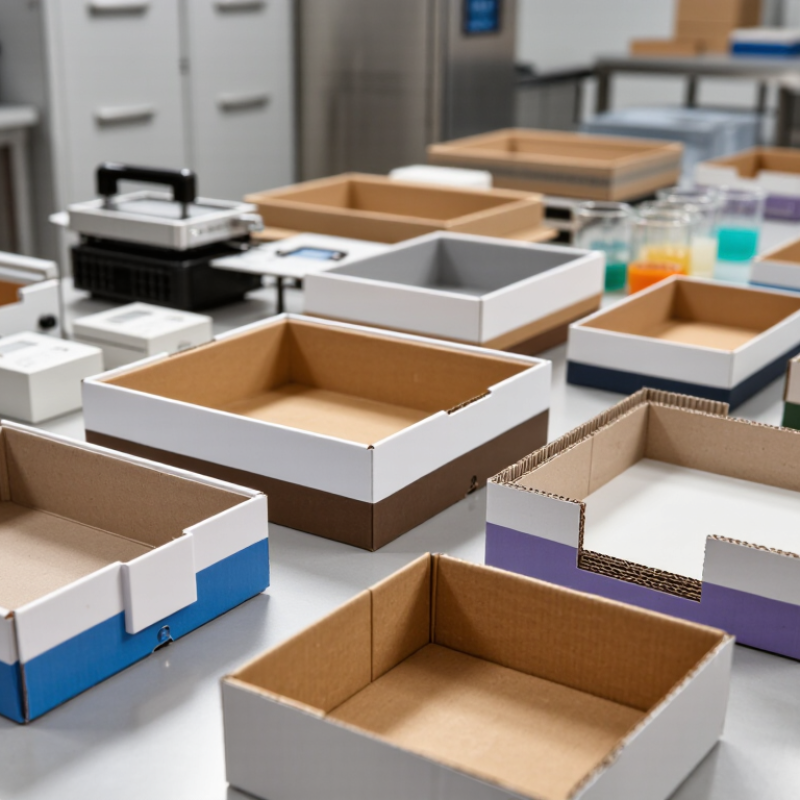
Barrier-lined paperboard trays combine a rigid fiber-based structure with a thin protective layer. The paperboard provides shape, stacking strength, and a familiar natural appearance. The barrier layer helps resist moisture, grease, oxygen, or product migration, depending on its design. These trays support portion control, clean handling, transport stability, and efficient filling on automated lines.
The liner may be applied as a coating, film, or laminated layer. Each option changes recyclability, sealing behavior, stiffness, and cost. No single barrier solves every packaging problem. Keep it simple. In practical sourcing, request the paperboard grade, liner composition, thickness, seal temperature, and intended shelf-life conditions. Suppliers should provide migration data and testing against applicable food-contact requirements.
During a plant trial, test the tray with the actual product, not only water. Hot filling, oily foods, refrigeration, and stacking can expose weaknesses quickly. Check for warping, leaks, delamination, odor transfer, and damaged corners. A thicker liner may improve protection, but it can reduce fiber recovery or complicate forming. That trade-off deserves attention. I would not rely on attractive samples alone. Ask for batch consistency, tolerance ranges, test methods, and storage guidance. Small details matter.
Identifying Product Requirements, Barrier Types, and Compliance Standards
Sourcing barrier-lined paperboard trays in 2026 starts with the product, not the coating. Define tray dimensions, fill weight, sealing method, shelf life, and transport temperature. A chilled dessert needs different protection from a greasy hot meal. Record contact time and storage conditions. Small omissions become expensive trials. Details matter.
Select the barrier according to the main failure risk. Water-based coatings may support fiber recovery, but heat and moisture can reduce performance. Dispersion barriers may suit chilled foods. Polymer films can provide stronger grease and oxygen resistance. Mineral or bio-based layers may work, yet claims require test evidence. Ask suppliers for Cobb, KIT, WVTR, OTR, migration, and seal-strength data. Test the finished tray. Not just the coating.
Compliance should cover paperboard, barriers, inks, adhesives, recycled fiber, and factory hygiene. For food contact, request declarations against applicable local rules. These may include EU Framework Regulation 1935/2004, GMP requirements, or US food-contact provisions. Check PFAS restrictions and recycling claims in every sales region. Keep batch records and traceability. An audit trail beats a polished brochure. Run pilot packs through stacking, condensation, and temperature exposure. Some failures appear after two weeks. Certificates can be outdated. Testing may not match the final tray. Review high-risk results with an independent laboratory. Perfect specifications are rare.
Evaluating Tray Materials, Designs, Suppliers, and Manufacturing Capabilities
Sourcing barrier lined paperboard trays in 2026 requires more than comparing catalog prices. Material selection should match the product’s moisture, grease, oxygen, and heat exposure. A water-based barrier may suit chilled bakery items, while a stronger coating may be needed for oily foods. Fiber content also matters. Higher recycled content can support sustainability goals, but it may affect stiffness, odor control, and forming performance.
Tray design influences both protection and production speed. Check rim strength, corner geometry, nesting tolerance, and sealing-flatness before approving samples. A shallow tray can reduce material use, yet it may collapse under stacking pressure. Deep corners provide capacity, but they can create coating gaps during forming. Small details matter. Ask suppliers for test data covering compression, leak resistance, seal integrity, and storage conditions. Independent verification is preferable when performance claims seem unusually strong.
Supplier evaluation should include coating equipment, die-cutting accuracy, forming capability, and quality-control procedures. Review pilot-run records, not only polished samples. Confirm whether the factory can control basis weight, barrier coverage, moisture, and dimensional variation across full production runs. I have found that communication quality often predicts delivery reliability. Still, it is easy to overvalue a responsive sales team. Inspect the manufacturing site, define acceptance limits, and request traceable batch records. A supplier may meet the first trial and struggle later. Plan for that possibility.
How to Source Barrier-Lined Paperboard Trays in 2026?
Comparative screening of common tray structures by typical moisture, grease, and oxygen barrier performance. Ratings use a 1–5 scale, where 5 indicates the strongest barrier. Final selection should be confirmed through package-specific shelf-life and converting trials.
Evaluation basis: uncoated fiber provides limited resistance; polymer, aqueous, dispersion, and foil laminate layers progressively improve protection against humidity, oils, and oxygen. Foil-laminated structures generally deliver the highest barrier but may require additional recycling and separation assessment.
Comparing Quotes, Minimum Orders, Lead Times, and Quality Assurance
When sourcing barrier lined paperboard trays in 2026, compare quotes line by line. A low unit price may exclude tooling, freight, testing, or special packing. Ask suppliers to separate board cost, barrier treatment, printing, tooling, and delivery charges. This exposes hidden differences between offers.
Minimum order quantities deserve equal attention. A supplier may quote an attractive price at 100,000 trays, while your forecast requires only 25,000. Ask whether mixed sizes, staged deliveries, or pilot runs are available. My early comparisons were too optimistic. I focused on price and underestimated storage costs. Small details matter.
Lead times should include sampling, artwork approval, tooling, production, and inspection. Request dates for each stage, not one broad promise. For quality assurance, define barrier performance before ordering. Useful checks may include grease resistance, moisture resistance, seal strength, coating weight, and dimensional accuracy. Request sample records, batch identification, and a certificate of analysis when available. A practical inspection plan should cover tray depth, edge cracking, surface defects, and stacking performance. Keep retained samples from each approved batch. They help resolve disputes later. Quality checks cost time, but rushed acceptance can cost more.
How to Source Barrier Lined Paperboard Trays in 2026? - Comparing Quotes, Minimum Orders, Lead Times, and Quality Assurance
Indicative 2026 sourcing benchmarks for standard food-contact barrier lined paperboard trays. Prices vary by dimensions, board grade, coating, tooling, order volume, freight, and compliance requirements.
| Sourcing Scenario |
Typical Tray Specification |
Indicative Quote
(USD / 1,000 pcs) |
Minimum Order |
Tooling / Setup |
Production Lead Time |
Sample Lead Time |
Recommended QA Controls |
Best Use Case |
| Stock-size, unprinted |
250–400 gsm paperboard; aqueous or polymer barrier; no custom graphics |
$180–$420 |
5,000–20,000 pcs |
Usually none |
2–4 weeks |
3–7 business days |
Dimensions, flatness, coating coverage, visual inspection, basis weight |
Pilot launches and short production runs |
| Custom die-cut, unprinted |
300–500 gsm board; custom rim, corner radius, and barrier treatment |
$260–$560 |
10,000–30,000 pcs |
$300–$1,200 one-time die charge |
4–6 weeks |
7–12 business days |
Die-line approval, dimensional tolerance, crease quality, compression resistance |
Foodservice and retail formats requiring a specific footprint |
| Custom printed, standard barrier |
300–450 gsm board; flexographic or offset-printed exterior; grease-resistant lining |
$420–$850 |
20,000–50,000 pcs |
$500–$2,000 for plates, cylinders, or setup |
5–8 weeks |
10–15 business days |
Color approval, print registration, rub resistance, grease resistance, seal integrity |
Branded meal, bakery, and takeaway packaging |
| High-barrier, heat-sealable |
350–500 gsm board; polymer or dispersion barrier designed for lidding or heat sealing |
$520–$1,050 |
30,000–75,000 pcs |
$800–$3,000 depending on tooling |
6–10 weeks |
2–3 weeks |
Seal-window study, leak testing, oil and water resistance, oven or microwave suitability where applicable |
Ready-meal, chilled, frozen, and high-moisture applications |
| Fiber-based, recyclable barrier |
300–450 gsm board; repulpable or dispersion-coated barrier, subject to local recycling rules |
$480–$980 |
25,000–60,000 pcs |
$600–$2,500 for custom forming and testing |
6–9 weeks |
2–3 weeks |
Repulpability screening, barrier coat weight, food-contact declaration, fiber sourcing records |
Programs prioritizing fiber recovery and plastic reduction |
| Export-scale annual program |
400–600 gsm board; custom size, print, barrier, packing, and scheduled releases |
$300–$700 at 100,000+ pcs per order |
100,000+ pcs |
Often amortized across the program |
8–12 weeks for first order; 4–7 weeks for repeat orders |
2–4 weeks |
Pre-production approval, batch traceability, AQL inspection, pallet checks, retained samples |
Stable recurring demand and multi-market distribution |
Quote-comparison checklist:
Confirm whether each quote includes tooling, artwork preparation, testing, inner packaging, export cartons, freight, duties, and taxes. Request a written material structure, food-contact declaration, certificate of analysis, approved sample, agreed tolerances, inspection standard, and delivery terms before placing the order.
Quality benchmarks to specify: board basis weight within the agreed tolerance; dimensions and rim height within the approved drawing; continuous barrier coverage; no delamination, pinholes, cracks, or exposed fibers; acceptable grease and water resistance for the intended food; and documented lot traceability.
Finalizing Samples, Contracts, Packaging Tests, and Supply Arrangements
Sourcing barrier lined paperboard trays in 2026 requires more than comparing unit prices. Sustainable packaging demand is accelerating. Smithers forecasts the global sustainable packaging market will reach approximately $423.3 billion by 2028. That growth increases pressure on fiber quality, coating performance, and supply continuity.
Request three sample rounds from each qualified converter. Test grease resistance, Cobb value, oxygen transmission, water vapor transmission, heat sealing, freezer exposure, and compression strength. Use the intended food or product weight. A tray that survives a laboratory test may still fail after twelve hours in a humid warehouse. I have seen attractive prototypes warp near the corners. That detail matters.
Tips:
Lock the technical specification before signing. Include board grammage, barrier chemistry, coating weight, dimensional tolerance, print limits, and acceptable defects. Require a signed change-control process. Contracts should define tooling ownership, inspection rights, lead times, minimum order quantities, rejected-load procedures, and backup capacity. Packaging tests should follow recognized methods, such as ASTM or ISO procedures, where applicable. PMMI’s 2024 Packaging Compass highlights persistent packaging labor and supply-chain pressures, so a single-source plan deserves scrutiny. Build safety stock around actual transit variability, not optimistic estimates. McKinsey’s 2023 packaging research also found that many consumers value sustainability, but performance remains non-negotiable. Cost models should include liner yield, rejected trays, testing, freight, and disposal. I would challenge the first approved sample again after pilot production. Real production exposes imperfect assumptions.
FAQS
They combine rigid paperboard with a thin protective layer. The liner helps resist moisture, grease, oxygen, or product migration.
Specify dimensions, fill weight, sealing method, shelf life, and transport temperature. Record contact time and storage conditions.
Water-based coatings may support fiber recovery. Polymer films can improve grease and oxygen resistance. Chilled foods need moisture protection.
Request board grade, liner composition, thickness, seal temperature, and intended shelf-life conditions. Ask for migration and performance data.
Use the actual product, not only water. Test hot filling, oily foods, refrigeration, stacking, condensation, and freezer exposure.
Check leaks, warping, delamination, odor transfer, weak seals, and damaged corners. Humid storage can reveal hidden problems.
Request declarations for paperboard, barriers, inks, adhesives, recycled fiber, and manufacturing hygiene. Confirm requirements in every sales region.
Define specifications, tolerances, acceptable defects, lead times, minimum orders, tooling ownership, and rejected-load procedures.
Not necessarily. Include testing, freight, rejected trays, disposal, liner yield, and safety stock in the cost model.
A single source may simplify coordination, but it increases disruption risk. Backup capacity deserves serious review. Perfect plans rarely survive production.
Conclusion
Sourcing barrier-lined paperboard trays in 2026 requires a structured approach that connects product performance, regulatory expectations, and supply reliability. Barrier-lined paperboard trays should be selected according to the intended product, filling process, shelf-life target, temperature range, moisture or grease resistance, and end-of-life requirements. Buyers should compare suitable barrier types, paperboard grades, coatings, sealing methods, and food-contact or other applicable compliance documentation before requesting quotations.
A thorough supplier evaluation should cover tray design expertise, tooling, production capacity, quality systems, testing equipment, and experience with customized formats. Quotes should be assessed beyond unit price by reviewing minimum order quantities, tooling charges, lead times, sampling costs, and quality assurance procedures. Before signing a contract, approve production samples, verify dimensions and barrier performance, conduct packaging and transport tests, and clearly define inspection standards, delivery schedules, corrective actions, and supply continuity arrangements. This process helps reduce sourcing risks while securing trays that perform consistently throughout manufacturing, distribution, and use.