
Fresh produce packaging is more than a box, film, or label. It is part of a working system that protects produce from harvest to shelf. For global buyers, the right choice depends on crop type, journey length, handling conditions, and destination requirements. A pack that suits firm apples may bruise leafy greens or trap moisture around berries. Small details matter.
A practical paraphrase of postharvest specialist Trevor Suslow’s guidance is: “Packaging helps protect quality, but careful temperature management remains essential.” Packaging cannot undo warm storage or rough handling. It can, however, reduce pressure damage, support airflow, and make products easier to stack and inspect. Think of a pallet of citrus crossing a humid port, or delicate herbs waiting in a chilled distribution room. Each journey creates different risks.
The tips ahead cover material choice, ventilation, cushioning, pack size, labeling, and transport testing. Buyers can use them to ask suppliers clearer questions and compare options beyond price alone. Request samples. Test real routes. Check how cartons behave when stacked, chilled, and exposed to humidity. Not every trial will succeed; that is useful information, too. A neat package can still fail in transit. The goal is practical protection, with less avoidable damage and waste.
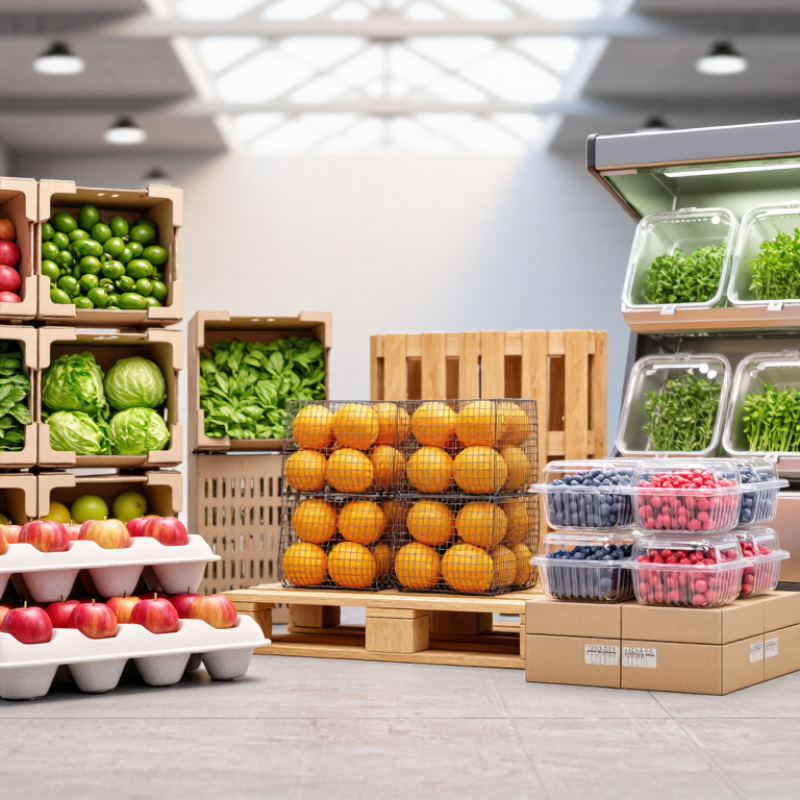
Fresh produce packaging should match the crop, not just the carton size. A ripe peach bruises under pressure, while leafy greens lose moisture quickly. Berries need airflow, but excessive ventilation can speed drying in a long, warm journey. Check firmness, skin sensitivity, respiration, and expected shelf life before choosing cushioning, liners, or vent patterns. Small details matter.
Then map those needs to the destination market. Estimate transit time, temperature changes, humidity, handling steps, and the final retail format. A pack designed for a nearby supermarket may fail after several days in a mixed-temperature supply chain. Confirm labeling and food-contact packaging requirements with the importer or relevant local authority; requirements can differ and change. Consumer habits matter too: buyers may prefer smaller portions, easy-open packs, or less visible plastic.
Run practical trials with the actual produce and route. Place temperature loggers in sample cartons, inspect for condensation, and check bruising after stacking and delivery. Test before scaling. A tidy laboratory result can still mislead if workers handle cartons roughly or cold storage is inconsistent. Record what failed, adjust one feature at a time, and repeat the trial before committing to a large order.
Fresh produce packaging should match the crop, journey, and climate. Delicate berries need cushioning and airflow; sturdy citrus can tolerate firmer containers. Corrugated board offers useful stacking strength, while molded fiber or reusable crates may suit different handling systems. No material works for every shipment.
Moisture needs careful control. A liner can reduce water loss, but a sealed pack may trap condensation and encourage decay. Small vents matter. For leafy greens, use packaging that protects crispness without blocking necessary airflow. For tomatoes or stone fruit, add dividers or cushioning to limit bruising during vibration. Check that pack size prevents produce from shifting, but avoid compression that damages items at the bottom.
Consider the whole route, not just the packing room. A humid port, long truck transfer, or repeated loading can expose weak corners and poorly secured closures. Test sample packs under realistic stacking, temperature, and handling conditions before ordering at scale. Test before scaling. Record bruising, condensation, and weight loss after transit; those details reveal whether a material is performing well. A neat-looking package can still fail in a warm container. Buyers sometimes focus too heavily on material cost, myself included; replacement losses can make a cheaper choice more expensive. Keep the design practical, and revise it when crop or route conditions change.
Fresh produce keeps respiring after harvest, so packaging must manage heat, gases, and water vapor—not merely survive shipping. FAO’s 2023 Tracking Progress report puts global food loss between harvest and retail at 13.2% for 2021. Packaging is only one part of prevention, but poor ventilation and moisture control can worsen losses.
Vent patterns should match the crop, pack size, and route. Leafy greens need rapid cooling and open airflow; berries need vents positioned to release heat without weakening the pack. More holes are not always better. Excess airflow can accelerate water loss, while blocked vents trap field heat. Test the packed load, not just an empty carton: inner layers may cool slowly.
Use clean, food-contact materials with suitable water-vapor transmission, and avoid sealing warm produce. UC Davis Postharvest Technology Center guidance stresses crop-specific temperature and humidity management; a film that works for one crop may fail for another. Check condensation after realistic cold-chain breaks. That detail is easy to miss. Transit trials should also include retail lighting, handling, and temperature swings. Packaging cannot repair poor cooling, and shelf-life gains will vary by cultivar and season.
| No. | Packaging Design Tip | Useful Design Guidance | Buyer Verification |
|---|---|---|---|
| 1 | Match ventilation to the commodity | Provide aligned openings that allow cooling air to pass through the load. As an initial trial, some ventilated cartons use roughly 5–10% open area, but the required amount depends on produce, carton strength, and cooling method. | Check airflow through a fully loaded pallet and measure cooling uniformity; do not approve a carton based on open-area percentage alone. |
| 2 | Keep ventilation holes unobstructed | Position openings so they remain clear when cartons are stacked. Avoid placing labels, liners, or inner packs over vents, and align carton holes with pallet airflow channels where feasible. | Inspect a completed pallet load and confirm that the chosen stacking pattern does not block the openings. |
| 3 | Control condensation, not just moisture loss | Use liners or moisture-control features only when appropriate for the crop and route. Excess moisture can encourage decay, while excessive water loss can cause wilting or shriveling. Warm produce packed into cold conditions can also develop condensation. | Trial the package under expected temperature changes and check for free water, decay, wilting, and package fogging. |
| 4 | Use liners with suitable perforation | Perforation affects humidity, gas exchange, and cooling. A sealed or lightly perforated liner is not a universal solution; its performance changes with produce type, fill weight, temperature, and film properties. | Request film specifications and test the complete pack for cooling time, condensation, and product condition throughout the planned journey. |
| 5 | Specify the correct temperature range | Set temperature by commodity: many leafy vegetables are stored close to 0°C, while chilling-sensitive crops such as bananas generally require warmer handling. Avoid applying one cold-chain set point to mixed commodities without compatibility checks. | Confirm commodity-specific temperature guidance and use data loggers to check conditions at different positions in the shipment. |
| 6 | Consider humidity requirements | Many fresh vegetables benefit from high relative humidity to limit water loss, but the target varies by crop and must be balanced against condensation and decay risk. Packaging does not replace suitable temperature and humidity management. | Agree on storage conditions for the specific product and measure both temperature and relative humidity during trials. |
| 7 | Protect the load from compression and impact | Choose carton strength, dimensions, and internal support for the product weight, stack height, moisture exposure, and transport duration. Corrugated board can lose strength when wet, and poorly aligned stacks can concentrate loads. | Test filled cartons under expected stacking and handling conditions, including humidity or refrigeration exposure where relevant. |
| 8 | Allow for ethylene sensitivity | Some fruits produce ethylene, which can accelerate ripening or senescence in sensitive produce. Separate incompatible commodities where possible and avoid designing mixed loads without checking ethylene compatibility. | Review the full cargo mix and journey plan, including storage beside other produce during consolidation and distribution. |
| 9 | Use modified-atmosphere packaging only when validated | Film permeability, perforation, produce respiration, and temperature together determine gas levels inside a pack. Incorrect gas balance can cause off-odors, fermentation, or other quality defects. | Require product-specific trials across realistic temperature conditions and verify gas levels and sensory quality before commercial use. |
| 10 | Design for the destination market and route | Account for transit time, handling, pallet dimensions, humidity exposure, traceability, and destination packaging or labeling rules. Packaging materials and coatings may be subject to different recycling and food-contact requirements by market. | Confirm current destination requirements, shipment dimensions, label information, and packaging-material compliance before production. |
Global produce packaging should be planned around the destination market, not just the farm. Label rules differ by country and sometimes by product. Check official import guidance before printing large label runs. Confirm required language, country of origin, product name, net weight, and any grade or variety declarations. Details matter.
Keep text legible on a damp carton. Use durable ink, clear lot codes, and labels that remain attached during cooling and transit. Lot identification should connect each shipment to harvest and packing records. Include storage guidance when it helps protect quality, such as “keep refrigerated,” but verify the wording and temperature range for the specific crop. Packaging materials should be suitable for food contact and must not transfer odors or residues. A neat label can still be confusing abroad; ask a local importer to review a sample.
Import paperwork needs equal care. Check whether the destination requires a phytosanitary certificate, inspection, or specific packing details. Make carton counts, product descriptions, and origin information consistent across labels and shipping documents. Small mismatches can trigger questions or delays. Recheck changes before each season; requirements and buyer specifications may shift. Even careful teams miss small fields, so a second review is worth the time.
Transport testing should reproduce the real journey: packed cartons, pallet stacking, vibration, temperature shifts, and delays. Record pulp temperature and humidity, then inspect for bruising, crushed corners, condensation, and blocked vents. Small details matter. A vent pattern that works in a cool room may fail when cartons are tightly wrapped on a warm loading dock. Compare total landed cost, including packaging, freight volume, and damaged-product claims—not just the price per box. FAO estimated that 13.2% of food was lost between harvest and retail in 2021, underscoring the value of testing packaging against actual handling conditions (FAO, SDG indicator 12.3.1a).
Sustainability checks should include material use, recyclability, and protection of the produce. OECD reported that only 9% of plastic waste was recycled globally in 2019 (Global Plastics Outlook, 2022). That is a reason to reduce unnecessary material, not to remove protection blindly. A thinner liner may cut weight but allow moisture loss; a reusable crate may work well on a return route but add cost when empty crates travel far. Trial both options with the same produce, route, and storage time. We should be honest about uncertainty: one successful shipment does not prove a package will perform across seasons, suppliers, or rougher handling. Keep the failed samples, too. They often reveal the weakest point.
A ripe peach can bruise under pressure, while leafy greens lose moisture quickly. Berries need airflow, but too much can dry them out.
Match vent size and placement to the crop, carton, and route. Blocked vents can trap heat. Extra holes are not always better.
Use clean, food-contact materials with suitable water-vapor transmission. Avoid sealing warm produce, and check for condensation after temperature changes.
Pack the actual produce and route. Use temperature loggers, stack cartons, and inspect for bruising and moisture after delivery. Test before scaling.
Transit time, humidity, handling, and retail format can change packaging needs. A nearby-market pack may fail after several warm and cold stages.
Check produce after realistic cooling, transport, and retail conditions. One clean trial may mislead; workers may handle cartons roughly.
No. Packaging can help manage airflow and moisture, but it cannot fix poor cooling. Results also vary by crop and season.
Confirm labeling and food-contact requirements with the importer or relevant local authority. Consider smaller portions and easy-open formats, too. I may be overchecking, but details matter.
Fresh produce packaging should begin with a clear understanding of the product and its destination. Different fruits and vegetables vary in size, firmness, respiration, and sensitivity to temperature or moisture, while buyers and markets may have specific handling and labeling expectations. Selecting suitable materials can help maintain freshness, cushion produce against impact, and reduce bruising during storage and transit.
Effective packaging also balances ventilation and moisture control to support shelf life without causing excess drying or condensation. Labels should provide accurate product and handling information and meet the requirements of the intended market. Before shipping at scale, test packaging under realistic transport conditions, compare costs, and consider options that reduce material use while remaining protective. A thoughtful Fresh produce packaging strategy can help buyers receive produce in good condition and make supply chains more dependable.