
0%

Choosing Commercially compostable packaging in 2026 requires more than selecting a “green” label. The real question is whether the package can break down in a suitable commercial composting facility, under controlled heat, moisture, oxygen, and time. A coffee cup may look responsibly designed, yet its lining could remain intact after processing. Its lid might require a different collection route. Small details matter.

David Newman, a long-time bioplastics industry specialist, has warned: “Compostable packaging is not a silver bullet.” That caution should guide every purchasing decision. Buyers should request current certification evidence, such as EN 13432 or ASTM D6400, and verify what the certification actually covers. Does it apply to the full package, including inks, adhesives, labels, and coatings? Ask local waste operators whether they accept the material. Certification alone does not guarantee real-world recovery.

Experience also shows that food-service environments create difficult conditions. A greasy tray, a wet napkin, or a thin film can confuse sorting teams and contaminate recycling streams. The better choice may sometimes be reusable packaging, recyclable fiber, or simple material reduction. That is uncomfortable, but honest.

This guide will examine material claims, supplier documentation, facility access, performance, cost, and customer communication. It will also question attractive assumptions. Commercially compostable packaging can be useful, but only when its entire journey makes sense. Otherwise, the package may offer a promise without a practical destination.
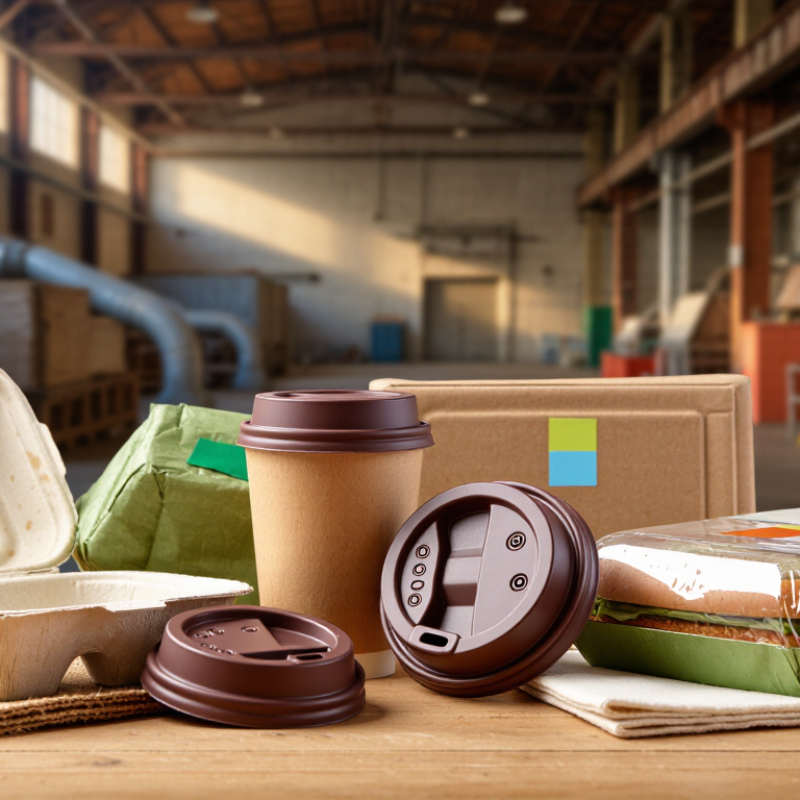
How to Choose Commercially Compostable Packaging in 2026?

What Commercially Compostable Packaging Means in 2026

Commercially compostable packaging means packaging designed for controlled industrial composting, not ordinary backyard compost. It needs heat, moisture, oxygen, and microbial activity. These conditions are usually unavailable in household bins. Standards such as EN 13432 and ASTM D6400 assess disintegration, biodegradation, ecotoxicity, and heavy metals. A package may pass a laboratory test yet fail at a local facility.

European Bioplastics’ 2024 market data projects global bioplastics production capacity to rise from about 2.47 million tonnes in 2024 to 5.73 million tonnes by 2029. Growth sounds encouraging. However, the Ellen MacArthur Foundation’s Global Commitment progress reports continue to highlight collection, sorting, and infrastructure gaps. Compostable packaging can also contaminate recycling streams when disposal signs are unclear. In a practical purchasing review, check the certification, coating, adhesive, ink, and lid separately. One certified film does not certify the complete pack.

Tips: Ask your waste contractor whether it accepts the exact format. Confirm the required composting temperature and processing time. Prefer clear disposal instructions near the opening. Test the package with real food, moisture, pressure, and storage temperatures. A cup that survives transport may break down poorly in a composting facility. That possibility deserves attention. Also question whether composting genuinely improves the system, or merely replaces a reusable option with a convenient-looking single use.

How to Verify Compostability Certifications and Material Claims

How to Choose Commercially Compostable Packaging in 2026?

A compostable claim needs evidence, not attractive wording. Check whether certification covers the finished package, not only its film or resin. EN 13432 and ASTM D6400 assess disintegration, biodegradation, ecotoxicity, and material safety. However, requirements differ by market and application.

“Industrially compostable” usually means controlled heat, moisture, and oxygen are required.

It does not mean the package will break down in a backyard pile.

Ask for the current certificate, certificate number, testing scope, and expiry date. Confirm that inks, adhesives, coatings, labels, and closures are included. A certificate for the base material may exclude these parts.

Also check disposal instructions against local collection systems. The 2024 market data from European Bioplastics estimated global bioplastics production at about 2.47 million tonnes. Yet composting access remains uneven. The packaging may be technically compostable, but practically unrecoverable. That uncomfortable gap matters.

Tips:

  • Request laboratory reports, not only a logo.
  • Verify the certificate directly with the issuing body.
  • Ask whether testing used the final production format.
  • Record the approved thickness and additives.
  • Inspect a sample batch.

Small changes can invalidate an earlier claim. I have seen teams trust supplier spreadsheets too quickly. That is risky.

Certification is useful, but it is not a magic passport. Check the date, scope, and disposal route every time.

How to Match Packaging Materials with Product and Disposal Needs

Choosing commercially compostable packaging in 2026 starts with the product, not the material label. A dry bakery item may suit a paper-based pouch with a compostable coating. A hot, oily meal needs stronger barriers against grease, moisture, and heat. Fresh produce may require airflow instead of a sealed structure. Test the package with the real product, temperature, filling process, and storage period.

Disposal planning matters just as much. Commercially compostable packaging usually needs controlled heat, moisture, oxygen, and microbial activity. It may not break down in a home compost bin, landfill, or ordinary recycling stream. Before selecting a format, check whether local commercial composting facilities accept that specific material. Ask for written acceptance details, not only a general compostable claim. Confirm relevant certifications, coating composition, printing inks, adhesives, and food-contact suitability.

Labels should guide people clearly. A short disposal instruction can prevent contamination. Still, instructions alone cannot fix missing infrastructure.

That is the difficult part.

A package may perform well in testing but fail in the real waste system. Pilot the package in several locations, measure leakage and shelf life, and observe disposal behavior. Keep records of failed samples too. They reveal where the design needs improvement. Slightly less attractive packaging may be the more responsible choice if it survives distribution and enters the correct processing stream.

How Commercial Composting Systems Process Compostable Packaging

Choosing commercially compostable packaging in 2026 requires understanding what happens after disposal. Industrial composting facilities do not simply place packages in a warm pile. Workers first inspect incoming loads and remove glass, metal, plastic, and oversized materials. Contamination can slow processing or make a finished compost batch unusable.

Accepted packaging then moves through shredding or size reduction. This exposes more surface area to moisture, oxygen, and microorganisms. The material is mixed with food scraps, yard waste, and other organic feedstocks. Operators monitor temperature, moisture, oxygen levels, and carbon-to-nitrogen balance. Active composting often reaches high temperatures, which supports rapid decomposition and reduces harmful organisms. However, heat alone does not guarantee that every package will break down fully.

After active processing, the mixture enters a curing stage. Screening removes visible fragments and separates oversized pieces for further treatment. This detail matters. A package may meet a compostability test but still fail at a local facility because it breaks down too slowly. Facility acceptance is essential. Ask where the packaging will be collected, whether that site accepts certified compostable items, and how contamination is handled. Clear labeling helps, but labels can peel away. Adhesives, inks, coatings, and additives also deserve scrutiny. The difficult truth is that compostable packaging is not automatically a better outcome. Its value depends on collection, processing capacity, and actual behavior inside the system.

How to Choose Commercially Compostable Packaging in 2026?

Commercially compostable packaging should be evaluated against recognized compostability standards, not only by its material label. The chart compares common maximum testing windows for disintegration and biodegradation.

How commercial composting systems process packaging: Organic waste is shredded and mixed, then exposed to controlled moisture, oxygen, and heat. Packaging must physically break apart within about 12 weeks and achieve substantial biodegradation within about 180 days under applicable commercial-composting test conditions. Actual facility performance depends on temperature, aeration, feedstock, and screening practices.

How to Assess Cost, Performance, and Environmental Impact

Choosing commercially compostable packaging in 2026 requires more than reading a green label. Assess cost, performance, and environmental impact together. Commercial composting usually means controlled heat, moisture, and oxygen at an approved facility. A package may fail if local collection systems cannot accept it. Ask suppliers for independent certification, material specifications, and disposal guidance. Check whether nearby composting facilities actually process the product. Real-world access matters.

Compare the full cost, not only the unit price. Include storage, transport, minimum order quantities, staff training, and possible disposal fees. Test the package with your actual food, moisture, oil, and temperature conditions. A coffee cup, takeaway tray, and produce bag face different stresses. Request testing data for seal strength, leak resistance, shelf life, and printing durability. Small trials reveal problems that laboratory samples can hide.

I have seen attractive packaging soften after ten minutes with hot food. That detail can change the entire purchasing decision.

Tips: Build a simple scorecard with cost, performance, certification, and local disposal options. Measure failure rates during a short pilot. Ask who pays when compostable items enter general waste. Be careful with carbon claims; manufacturing, transport, contamination, and processing all affect results. Compostable is not automatically better in every location. Recheck supplier documents annually because infrastructure and standards can change.

FAQS

What evidence should support a compostability claim?

Request the current certificate, certificate number, testing scope, and expiry date. A finished package needs evidence. A material-only certificate may not cover the complete product.

Which package parts should certification include?

Check the film, inks, adhesives, coatings, labels, and closures. Small additions can change the result. Do not assume every component is covered.

Does industrial compostability mean home compostability?

No. Industrial systems use controlled heat, moisture, oxygen, and microbial activity. A backyard pile may not provide those conditions. This difference is easy to miss.

How can buyers verify a certificate?

Verify the certificate directly with the issuing organization. Ask whether testing used the final production format. Record approved thickness and additives. Supplier spreadsheets alone are not enough.

How should packaging match the product?

Test packaging with the real product, temperature, filling process, and storage period. Dry bakery goods may need coated paper structures. Hot, oily meals need stronger heat and grease barriers. Fresh produce may need airflow.

Why does local disposal access matter?

A package can be technically compostable but practically unrecoverable. Check whether nearby facilities accept that exact material. Request written acceptance details. Infrastructure is the uncomfortable part.

What happens inside a commercial composting facility?

Workers inspect incoming loads and remove unsuitable materials. Accepted packaging may be shredded and mixed with organic feedstocks. Operators monitor heat, moisture, oxygen, and carbon-to-nitrogen balance. Processing is controlled.

Can certified packaging still fail in real facilities?

Yes. It may break down too slowly for local processing conditions. Screening can reveal visible fragments after active composting. Test several locations and record failed samples. Certification helps, but it is not a magic passport.

Conclusion

Choosing commercially compostable packaging in 2026 requires more than selecting a package labeled “compostable.” Commercially compostable packaging is designed to break down in controlled industrial composting facilities, where heat, moisture, oxygen, and microbial activity are carefully managed. Buyers should verify recognized compostability certifications, review material claims, and confirm whether the packaging is accepted by local commercial composting systems. They should also match the material to the product’s shelf life, moisture, heat, grease, and durability requirements.

A responsible choice considers the full disposal pathway, including collection, transportation, sorting, and processing. Commercial composting facilities typically shred and mix suitable packaging with organic waste before controlled decomposition transforms it into compost. Businesses should compare total cost, operational performance, customer usability, and environmental impact rather than focusing only on appearance or price. The most suitable option is one that performs reliably, has credible certification, fits available waste infrastructure, and supports realistic end-of-life recovery.

Amelia

Amelia

Amelia is a marketing professional with a strong understanding of the company’s products and the needs they are designed to address. She regularly contributes expert articles to the company website, turning product knowledge and industry insights into clear, practical guidance for customers. Her......